Suboxone vs Sublocade: Which Is Right for You?
Choosing medication for opioid recovery can feel overwhelming, especially when more than one option sounds similar. Two treatments that often come up are Suboxone and Sublocade. Both can support recovery, reduce cravings, and help people move forward with more stability.
Still, they are not the same. The right choice depends on your history, symptoms, treatment goals, daily routine, and how your body responds to medication. For patients in Shawnee, KS, understanding the difference between Suboxone vs Sublocade can make the first step feel less confusing.
At Coltrain Medical Group, the goal is not to rush you into a decision. It is to help you understand your opioid recovery options, talk through your concerns, and choose a treatment path with medical guidance.
What Do Suboxone and Sublocade Have in Common?

Suboxone and Sublocade are both used in medication assisted treatment for opioid use disorder. They work by helping reduce cravings and withdrawal symptoms, which can make recovery feel more manageable.
Both treatments contain buprenorphine, a medication that attaches to opioid receptors in the brain. This can help lower the urge to use opioids without producing the same intense effects as full opioid drugs.
Medication alone is not the whole recovery plan. Many patients do best when treatment also includes counseling, support, accountability, and regular follow-up care. That is why structured
addiction programs in Shawnee, KS can be helpful for people who need more than a prescription.
Why medication assisted treatment can help
Opioid recovery is not only about willpower. Long-term opioid use can change how the brain and body respond to stress, pain, and cravings. Medication assisted treatment helps support the body while the person works on rebuilding daily routines and coping skills.
This type of care can reduce the cycle of withdrawal and relapse risk. It also gives patients a steadier foundation while they focus on work, family, health, and emotional recovery.
Why medical guidance matters
Suboxone and Sublocade both require professional evaluation. A provider needs to review your opioid use history, current symptoms, other medications, and overall health before recommending treatment.
Some people may start with one option and later switch to another. Others may stay on the same medication for a longer period because it works well for their needs. The best plan is the one that fits your recovery and can be safely monitored.
How Is Suboxone Different From Sublocade?
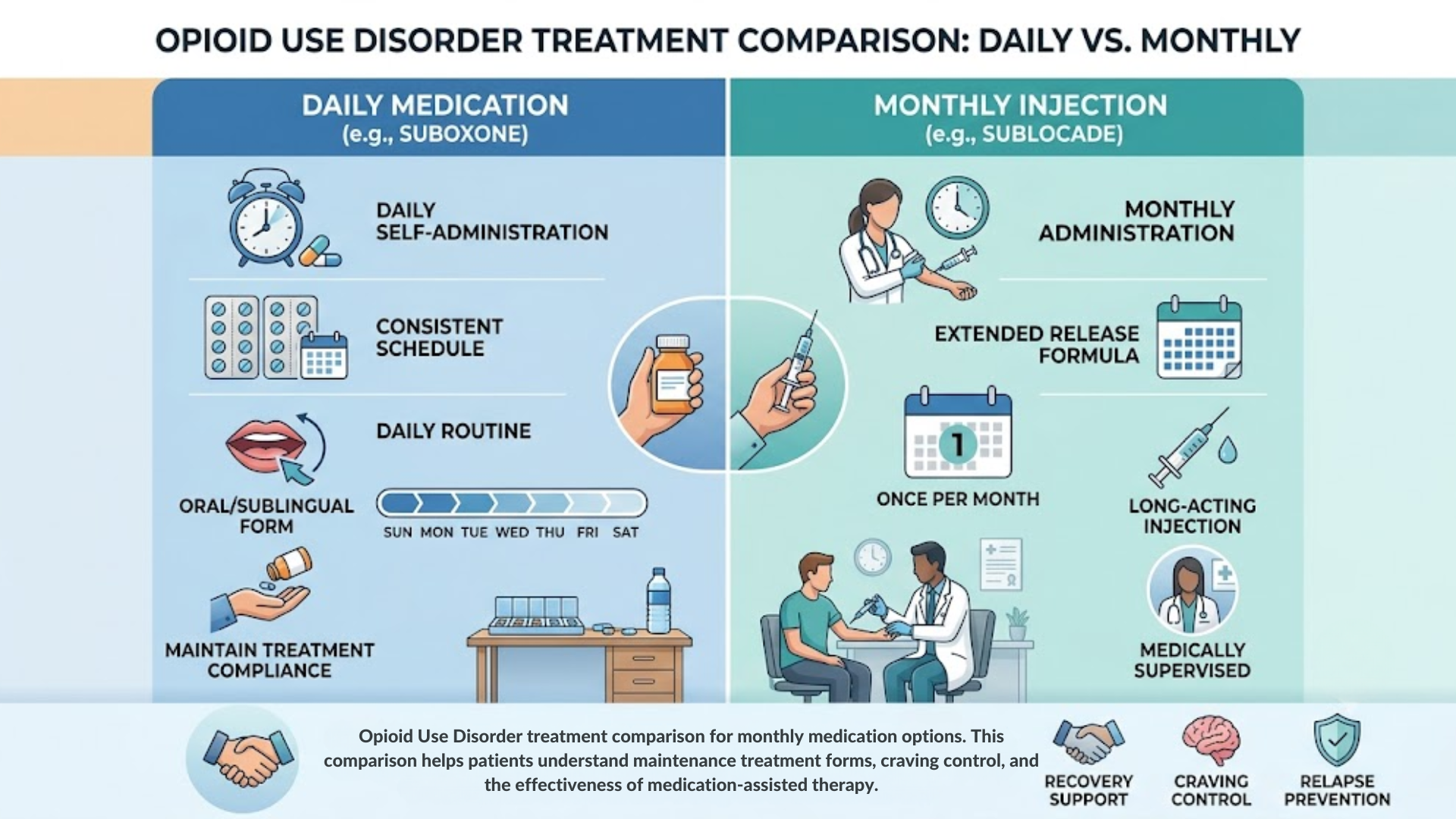
The biggest difference is how each medication is taken. Suboxone is usually taken at home as a dissolvable film or tablet placed under the tongue or inside the cheek. Sublocade is a once-monthly injection given by a healthcare professional.
Suboxone contains buprenorphine and naloxone. The naloxone component is included to help discourage misuse. Sublocade contains extended-release buprenorphine and is injected under the skin, where it slowly releases medication over time.
Patients who are comparing
Suboxone programs in Shawnee, KS with monthly injection options often ask about convenience, privacy, consistency, and accountability. Those are all valid concerns.
Daily dosing versus monthly treatment
Suboxone is taken on a regular schedule, often daily. For some patients, this feels reassuring because it creates a routine. It can also allow providers to adjust treatment more directly during the early stages of care.
Sublocade removes the need to take medication every day. Since it is given once a month, it may be helpful for people who have trouble remembering daily doses or who want less medication management at home.
Flexibility versus consistency
Suboxone may offer more flexibility during the beginning of treatment. If symptoms change, your provider can evaluate whether an adjustment is needed.
Sublocade offers consistency. Once the injection is given, the medication releases gradually for the month. This can be a benefit for patients who are stable and want fewer daily reminders of treatment.
Who Might Be a Better Fit for Suboxone?
Suboxone may be a good fit for patients who are just beginning medication assisted treatment or who need closer dose adjustments. It can also work well for people who prefer taking medication at home and feel confident following a daily plan.
Some patients like the sense of control that comes with Suboxone. They know when they take it, they can report how they feel, and they can talk with their provider if cravings or withdrawal symptoms are not well managed.
Suboxone may also be considered when a provider wants to observe how a person responds to buprenorphine before discussing long-acting medication. For many people, it is a practical first step.
When daily structure is helpful
A daily routine can support recovery. Taking medication at the same time each day may become part of a larger schedule that includes meals, work, appointments, and support meetings.
This structure can be especially useful early in recovery, when symptoms and stress may still feel unpredictable. A daily treatment plan can help patients stay connected to their goals.
When ongoing adjustments may be needed
Early recovery can bring changes in sleep, mood, cravings, pain levels, and energy. Suboxone gives providers room to assess how treatment is working and consider changes when appropriate.
That does not mean Suboxone is only for short-term care. Some patients stay on it for longer periods because it continues to support their recovery well.
Who Might Be a Better Fit for Sublocade?
Sublocade may be a good fit for patients who are already stable on buprenorphine and want a monthly treatment option. Because it is given by injection, it removes the need to keep daily medication at home.
This may be helpful for patients who worry about missed doses, privacy, travel, or medication storage. It can also reduce the stress of remembering a daily dose while still supporting recovery.
Patients interested in
Sublocade injection programs in Shawnee, KS should expect a provider to review whether they are medically ready for this option. Sublocade is generally used after a person has already started and stabilized on a buprenorphine-based treatment.
When monthly treatment may help
Monthly treatment can make recovery feel less centered around medication. For some patients, that mental shift matters. They can focus more on counseling, relationships, work, and building healthier routines.
It may also help people who have had trouble staying consistent with daily medication. Since Sublocade is administered in a clinical setting, each dose includes built-in contact with a provider.
When medication storage is a concern
Keeping medication at home is not ideal for everyone. Some patients may worry about others finding it, losing it, or taking it incorrectly.
Sublocade can reduce those concerns because the medication is not stored at home. For the right patient, that can bring peace of mind and support safer treatment.
How Do You Choose Between Suboxone vs Sublocade?

The choice between Suboxone vs Sublocade should be made with a qualified provider. There is no single answer that fits every patient. Your treatment history, current symptoms, home environment, support system, and personal preferences all matter.
If you are still having frequent cravings or withdrawal symptoms, your provider may want to focus on stabilization first. If you are already stable and want a longer-acting option, Sublocade may be worth discussing.
It can also help to think about your daily life. Do you do well with routines? Do you travel often? Are you concerned about medication at home? Do you want more flexibility or fewer daily reminders? These questions can guide the conversation.
Many people also benefit from broader
drug treatment programs in Shawnee, KS that include education, support, and follow-up care. Medication works best when it is part of a larger recovery plan.
Questions to ask during your consultation
Ask your provider how each option works, what side effects are possible, and what the follow-up schedule looks like. You can also ask what happens if one medication does not feel like the right fit.
It is okay to be honest about fears, past treatment experiences, or concerns about relapse. Those details help your provider recommend care that is realistic for your life.
Why the right support system matters
Recovery is easier when you are not trying to do everything alone. A provider can help with medication decisions, but emotional and practical support also matters.
That may include counseling, peer support, family education, or a structured program. The right mix of support can help you stay steady through difficult moments.
Support for Opioid Recovery in Shawnee, KS
Patients in Shawnee, KS deserve treatment that feels respectful, private, and focused on real progress. Whether you are comparing medications for the first time or looking for a different approach after past treatment, local care can make it easier to stay connected with appointments and support. Coltrain Medical Group helps patients explore opioid recovery options, including Suboxone and Sublocade, with guidance that fits their needs and recovery goals.
Call Coltrain Medical Group for a Consultation
Coltrain Medical Group is here to help you understand your treatment options without pressure. To talk through Suboxone vs Sublocade and find out what may be right for you, call 913-295-9600 to schedule a consultation in Shawnee, KS.

Frequently Asked Questions
Is Sublocade stronger than Suboxone?
Sublocade is not simply a “stronger” version of Suboxone. Both use buprenorphine, but they are delivered differently. Suboxone is usually taken daily, while Sublocade is a monthly extended-release injection given by a healthcare professional.
Can I switch from Suboxone to Sublocade?
Some patients may be able to switch from Suboxone to Sublocade after they are stable on buprenorphine. Your provider will need to review your treatment history, current dose, symptoms, and overall health. Do not stop or change medication without medical guidance.
Does Suboxone or Sublocade stop cravings?
Both medications can help reduce opioid cravings and withdrawal symptoms for many patients. Results can vary based on the person, dosage, consistency, and other parts of the recovery plan. Counseling and regular follow-up care can also improve support during treatment.
Which option is better for long-term opioid recovery?
The better option depends on the patient. Suboxone may be a good fit for someone who benefits from daily structure or needs dose adjustments. Sublocade may be better for someone who is stable and wants a monthly treatment option with less medication management at home.
Do I still need counseling with Suboxone or Sublocade?
Counseling is often recommended as part of medication assisted treatment. Medication can help with cravings and withdrawal, while counseling can address triggers, stress, relationships, and relapse prevention. Together, they can support a stronger recovery plan.
Suboxone and Sublocade can both play an important role in opioid recovery, but the right choice should be personal and medically guided. If you are in Shawnee, KS and want help comparing your options, Coltrain Medical Group can talk with you about the next step. Call 913-295-9600 to schedule a consultation and start the conversation.
You might also like